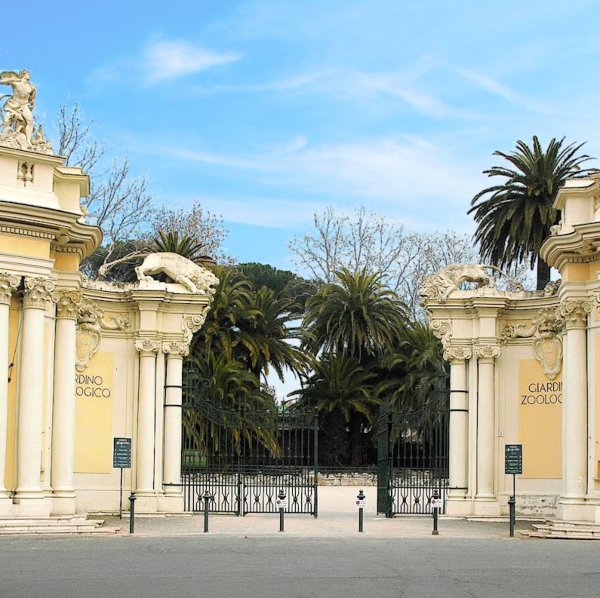
Bioparco Rome, the city's zoological garden, sits in the northern part of Villa Borghese park and first opened its gates on January 5, 1911. Today, more than 1,000 animals from over 200 species live across 17 hectares, from Sumatran tigers to pygmy hippos to white-handed gibbons, in enclosures designed to resemble their natural habitats. Since its transformation into a modern bioparco in 1998, the focus has shifted from simple animal displays to species conservation, research, and environmental education.
History & Significance
Bioparco Rome traces back to 1908, when a group of investors founded the "Società Anonima per il Giardino Zoologico." They brought in Carl Hagenbeck to plan the site, who had recently developed the concept of a bar-less zoo at his own park in Hamburg-Stellingen: moats instead of cages, open enclosures designed to resemble natural habitats. The zoo opened on January 5, 1911, with Mayor Ernesto Nathan in attendance, on a 12-hectare site in the northern part of Villa Borghese.
In 1935, architect Raffaele De Vico expanded the site to its current 17 hectares. During this period, a reptile house and a large aviary with a geodesic dome structure were built, unique in Europe at the time. The zoo went on to become one of the most significant on the continent.
After World War II, the zoo increasingly fell into decline, with aging enclosures and tight budgets shaping the following decades. In 1994, the idea emerged to transform the site into a modern bioparco. The concept was put into action in 1998: the zoo was rebranded as Bioparco, with a stronger focus on research, species conservation, and housing endangered species. In 2004, the newly founded Fondazione Bioparco di Roma officially took over as the operating body.
Today, the Bioparco is home to more than 1,000 animals from over 200 species and takes part in international breeding programs for endangered species. As a member of the zoo associations EAZA and WAZA, it works together with other zoological institutions around the world.
Opening hours
Bioparco Rome is open year-round, except for December 25. Opening hours change seasonally, and the ticket counters and last entry close one hour before the park closes.
March 1 – October 25, 2026
| Monday | 9:30 AM – 6:00 PM |
| Tuesday | 9:30 AM – 6:00 PM |
| Wednesday | 9:30 AM – 6:00 PM |
| Thursday | 9:30 AM – 6:00 PM |
| Friday | 9:30 AM – 6:00 PM |
| Saturday | 9:30 AM – 7:00 PM* |
| Sunday | 9:30 AM – 7:00 PM* |
On Saturdays, Sundays, and public holidays between March 30 and October 5, 2026, Bioparco stays open later, until 7:00 PM.
Tickets & Prices
Admission to Bioparco Rome costs €19.00 for adults at the ticket counter. Children from 1 meter tall up to age 10, as well as seniors 65 and older, pay the reduced price of €14.00; on Wednesdays, seniors additionally get a special rate of €9.00. Children under 1 meter tall get free admission. Visitors with a 100% disability rating visit the Bioparco free of charge together with a companion; for a lower disability rating, the price is €11.00. Since 2026, there's also an open ticket with no fixed date, valid for 6 months from purchase.
| Adults (11+) | €19.00 |
| Children (up to 10 & over 1m tall) | €14.00 |
| Seniors (65+) | €14.00 |
| Seniors, Wednesdays only | €9.00 |
| Children (under 1m) | Free |
| 100% disability + companion | Free |
| Under 100% disability | €11.00 |
| Last minute (from 2 hours before closing) | €9.00 |
Where can you buy Bioparco tickets?
Tickets for Bioparco Rome are available online through the official website, directly at the ticket counter by the main entrance, through travel agencies and online ticket providers, and at tourist information centers, such as at Termini station. Booking online skips the line at the counter, which is especially worth it on weekends and public holidays.
Buy tickets online
Direct booking, flexible cancellation up to 24 hours before your visit.
Directions & Location
Bioparco Rome sits inside Villa Borghese park, one of the city's largest public parks. By metro, take Line A to "Flaminio – Piazza del Popolo," from there it's about a 20-minute walk through the park to the entrance. Tram line 19 gets you closer, to the "Bioparco" stop, as does the bus, which stops right at the entrance under the same name.
Driving is possible, but parking around the park is limited and, like most parking in Rome, more trouble than it's worth. Bike-share or e-scooter rentals, widely available around Rome, are another way to reach the Bioparco.
| Metro | A | Flaminio |
| Bus | 52, 53, 217, 360, 490, 910, 926 | Bioparco |
| Tram | 19 | Bioparco |
Don't Miss These
Grande Voliera
Under the geodesic dome built in 1935, numerous bird species fly freely through the wide net structure, with no cages in between.
Villaggio degli Scimpanzé
A group of chimpanzees lives in the Chimpanzee Village, a spacious enclosure designed to resemble their natural habitat.
Casa delle Giraffe
In the African savanna area, giraffes live alongside other hoofed animals on open ground, clearly visible from the visitor paths.
Rettilario
The reptile house displays snakes, lizards, and amphibians from a range of climate zones, many behind glass in climate-controlled terrariums.
Frequently Asked Questions About Bioparco Rome
For a relaxed walk through the 17-hectare site, plan for 2 to 3 hours.
Yes, with one exception: Bioparco is closed on December 25. Opening hours themselves change by season.
Yes. Visitors aged 65 and up pay the reduced price of €14.00; on Wednesdays, this age group also gets a special rate of €9.00.
Yes, most paths are paved. Since Bioparco sits on a hill inside Villa Borghese park, there are some slopes throughout, especially toward the back of the site. Strollers and wheelchairs can generally get through, just with a bit more effort than on flat ground. According to Bioparco, the reptile house is not wheelchair accessible.
Yes, bringing your own food is allowed. The park also has several bars and a bistro offering hot food, snacks, and drinks.