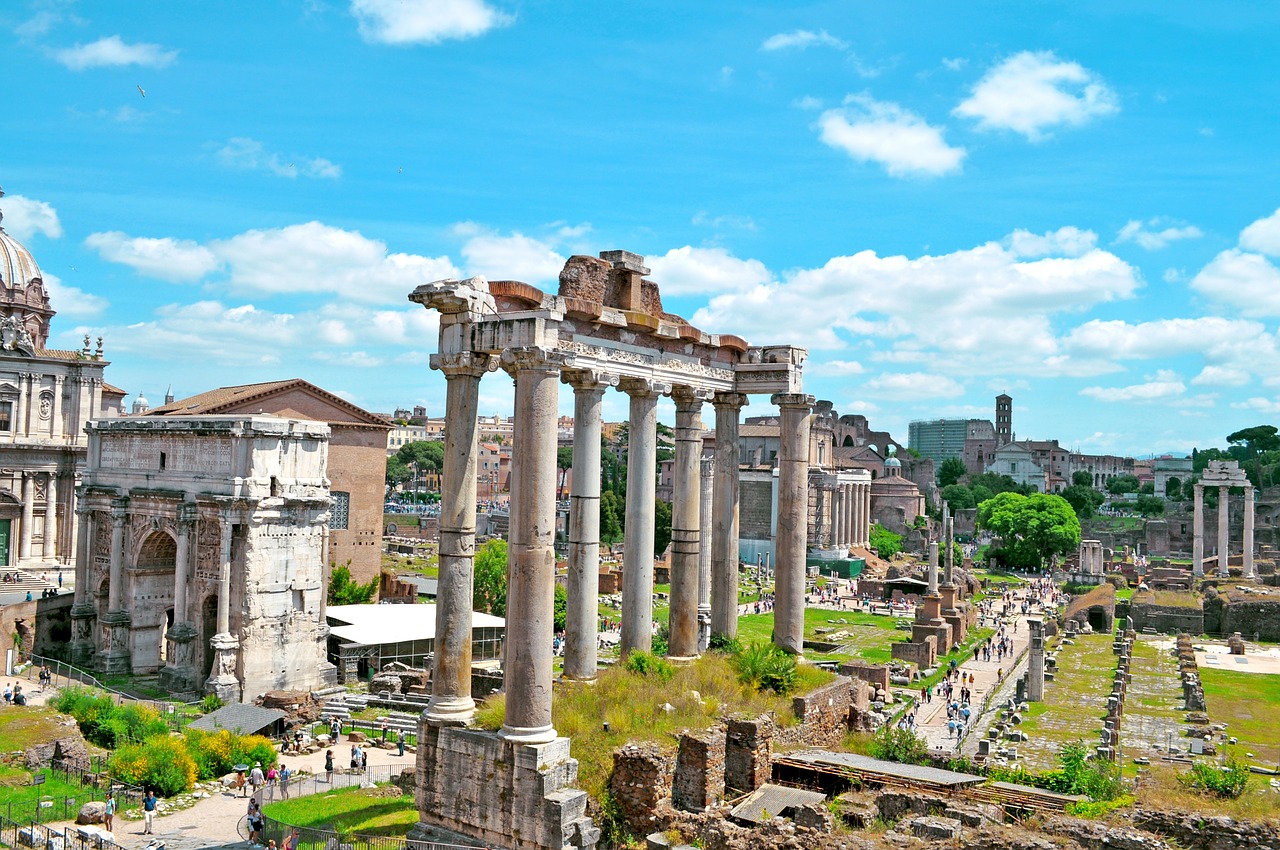
The oldest Roman forum is the Roman Forum. It lies between the Capitoline and Palatine hills, right in the historic center of Rome, close to the Colosseum. The forum is about 2,800 years old and served for centuries as the economic and social center of Rome and the Roman Empire.
History of the Roman Forum
The Roman Forum was once the center of daily life in ancient Rome, the place where the city’s public, religious, political, and commercial life played out. It was the heart of Roman civilization, and its remains still tell the story of the Roman Empire today.
The forum’s origins go back to the 7th century BC, when the site was still a marshy valley between Rome’s seven hills. Over time, the area was drained and began to develop into Rome’s central square, where temples, basilicas, and other public buildings were built. During the Roman Republic, the forum grew steadily. It became the center of political life, hosting Senate sessions, elections, and public speeches. Many of the best-known figures in Roman history, from Julius Caesar to Cicero, left their mark here.
Under Augustus and the rise of the Roman Empire, the forum reached its peak. Monumental buildings, triumphal arches, and temples shaped the skyline and reflected the empire’s power and wealth. Its slow decline began in late antiquity: much of its structure was destroyed, stripped for building material, or built over in the centuries that followed. Despite this, many ruins survived and still bear witness to Rome’s scale today.
Archaeological excavations in the 18th and 19th centuries brought the remains of ancient Rome back into view. Today, the Roman Forum is one of the city’s most important tourist sites and an open-air museum that offers a direct look into the history of the Eternal City.
Every stone, column, and fragment here is part of that history. Walking through the Roman Forum is as close as you can get to standing in the middle of ancient Rome.
Opening hours
The Forum is open daily year-round from 9:00 AM. The only closing days are January 1 and December 25. On some days it may close on short notice, for example during a papal visit (Good Friday) or sporting events.
Opening hours October 1 – October 24, 2026
| Monday | 9:00 – 6:30 PM |
| Tuesday | 9:00 – 6:30 PM |
| Wednesday | 9:00 – 6:30 PM |
| Thursday | 9:00 – 6:30 PM |
| Friday | 9:00 – 6:30 PM |
| Saturday | 9:00 – 6:30 PM |
| Sunday | 9:00 – 6:30 PM |
Opening hours October 25, 2026 – February 28, 2027
| Monday | 9:00 – 4:30 PM |
| Tuesday | 9:00 – 4:30 PM |
| Wednesday | 9:00 – 4:30 PM |
| Thursday | 9:00 – 4:30 PM |
| Friday | 9:00 – 4:30 PM |
| Saturday | 9:00 – 4:30 PM |
| Sunday | 9:00 – 4:30 PM |
How long are the wait times at the Roman Forum?
Since the Roman Forum sits right next to the Colosseum and both share the same combo ticket, most visitors combine the two, which shows in the wait times here as well. Without a ticket, plan for at least an hour at the ticket counter, sometimes longer depending on the time of day. If you already have a ticket, you can use the dedicated entrance for ticket holders, where the line moves noticeably faster.
Tip: visiting the Roman Forum in the afternoon usually means shorter waits than in the late morning or around midday.
Tickets & Prices
Admission for adults 18 and over costs from €18.00 on-site. The ticket is sold as a combo, giving you access to the Palatine Hill and the Colosseum in addition to the Forum. Note that the Colosseum has its own separate entry rules. EU citizens up to age 25 can buy a discounted combo ticket. Every buyer also pays a processing fee that applies to both the Forum and the Colosseum ticket.
The same ticket also covers the Colosseum and Palatine Hill – those admissions are already included. Depending on the ticket type, it’s valid for either 24 hours or 2 days and allows one entry each.
| Adults (18+) | from €18.00 |
| EU citizens (18–25) | from €2.00 |
| Non-EU citizens (18–25) | from €18.00 |
| Under 18 | Free |
| Audio guide | €5.00 |
| Processing fee | €2.00 |
Where can I buy Roman Forum tickets?
The Roman Forum has two separate entrances where you can buy the combo ticket: one on "Via della Salaria Vecchia" and one on "Via di San Gregorio," right next to the Colosseum. Forum tickets can also be bought at the Colosseum ticket counters, since both tickets share the same validity. We recommend buying online ahead of your visit to skip the long lines at the ticket counters.
What does the Roman Forum ticket include?
Along with the Roman Forum, the ticket also covers the Colosseum and Palatine Hill. Within the ticket’s validity window, each of these is a one-time entry.
Can I visit the Roman Forum for free?
Yes, on select days each year, Rome offers free admission to the Roman Forum and Palatine Hill for residents and visitors alike. This is typically the first Sunday of each month, plus a handful of additional dates, such as the Italian national holiday on June 2. Expect noticeably longer wait times on these days compared to the already busy regular schedule.
Free admission days in 2026 for the Roman Forum / Palatine:
- January 5, 2026
- February 1, 2026
- March 1, 2026
- April 5, 2026
- May 3, 2026
- June 1 + 2, 2026
- July 5, 2026
- August 2, 2026
- September 6, 2026
- October 4, 2026
- November 1, 2026
- December 6, 2026
Buy tickets online
Direct booking, flexible cancellation up to 24 hours before your visit.
Directions & Location
The Forum sits close to the Colosseum, so you can take Metro line B or C to the "Colosseo" stop. From there it’s just a short walk to the Roman Forum. You can also take one of Rome’s public buses (ATAC): lines 51, 75, 81, 85, 87, 118, and 673 stop at "San Gregorio," and lines 81, 85, and 87 stop at "Fori Imperiali." The tram also gets you close to the Roman Forum.
| Metro | B, C | Colosseo |
| Bus | 51, 75, 85, 87, 117 | Colosseo |
| Bus | 51, 75, 81, 85, 87, 118, 673 | San Gregorio |
| Bus | 81, 85, 87 | Fori Imperiali |
| Tram | 3, 8 | Colosseo / Salvi N. |
Highlights – What to See
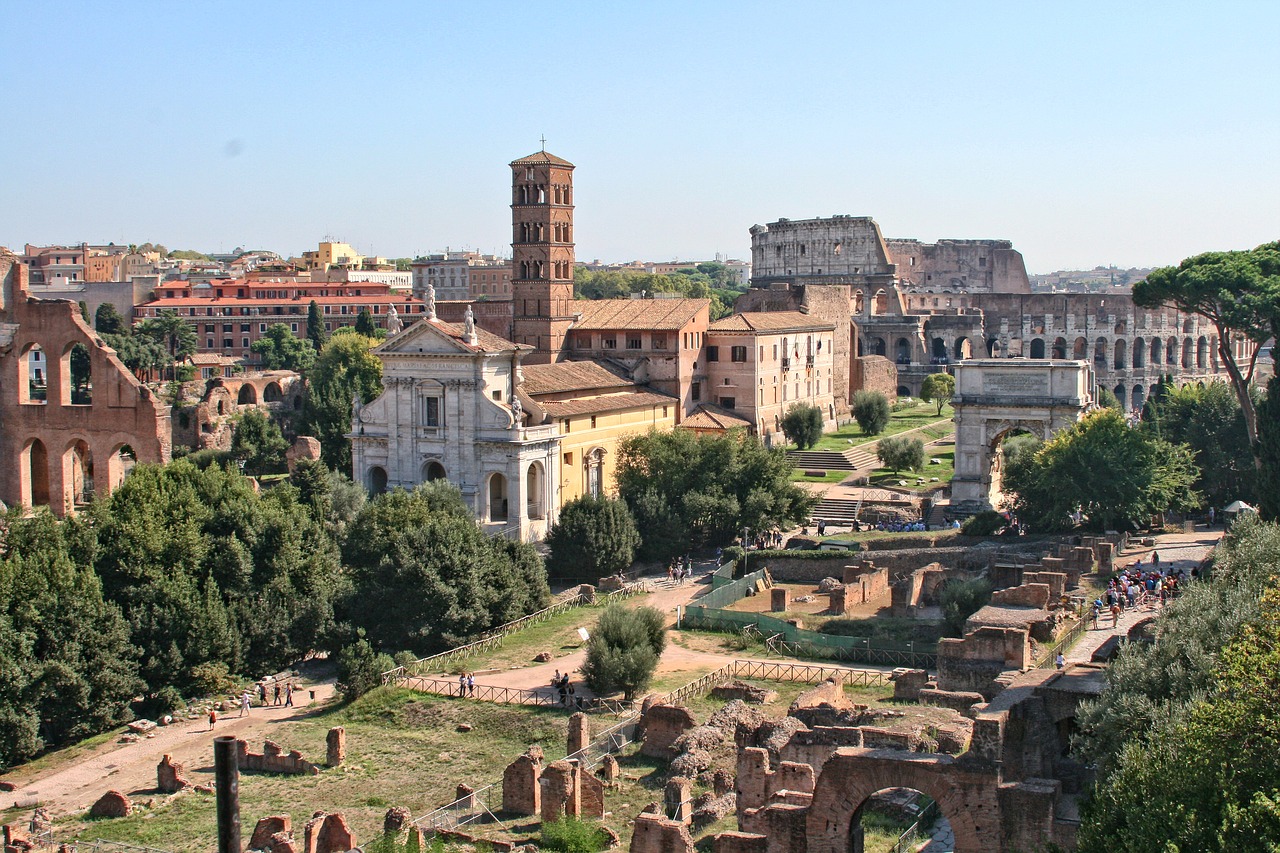
Arch of Titus
This triumphal arch was built after the death of Emperor Titus. Its reliefs depict the Roman triumph following the conquest of Jerusalem, including the looted ceremonial objects taken from the temple.
Curia Julia
The Curia Julia was where the Roman Senate met. Planned by Julius Caesar and completed under Augustus, the building still preserves its main chamber, including its marble wall and floor panels.
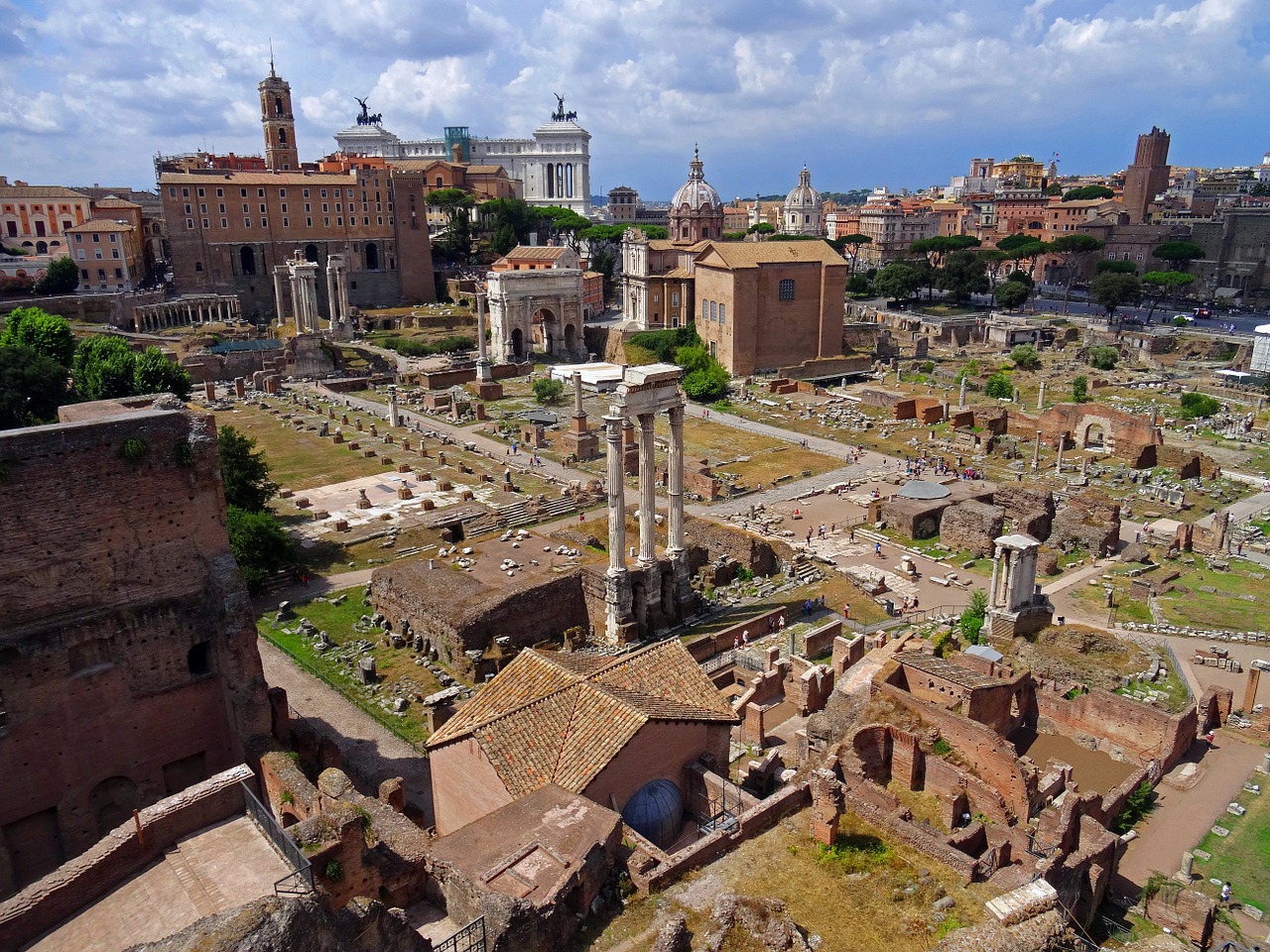
Temple of Saturn
The Temple of Saturn is one of the oldest sanctuaries in the Forum. Eight columns of its portico still stand, marking the site of Rome's state treasury, where cash reserves and important documents were kept.
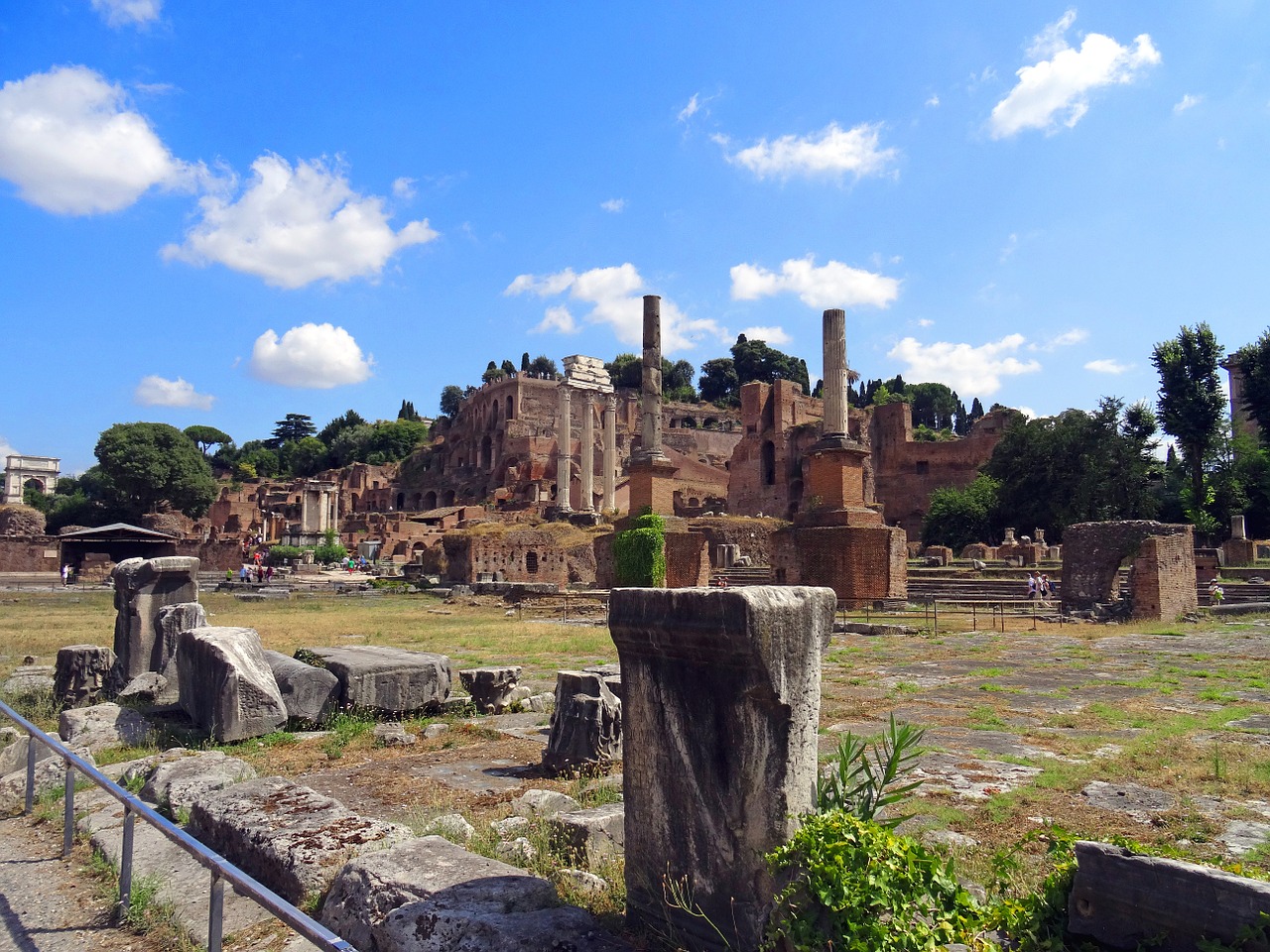
Via Sacra
The Via Sacra was the main street of the Roman Forum. Triumphal processions, religious ceremonies, and public appearances all passed along this route between the Capitoline, the Forum, and the Palatine.
Photo Gallery
Frequently Asked Questions
The Roman Forum was the central public square of ancient Rome. It's where the Senate met, where major temples, basilicas, and triumphal arches stood, and where the city's political and religious life played out.
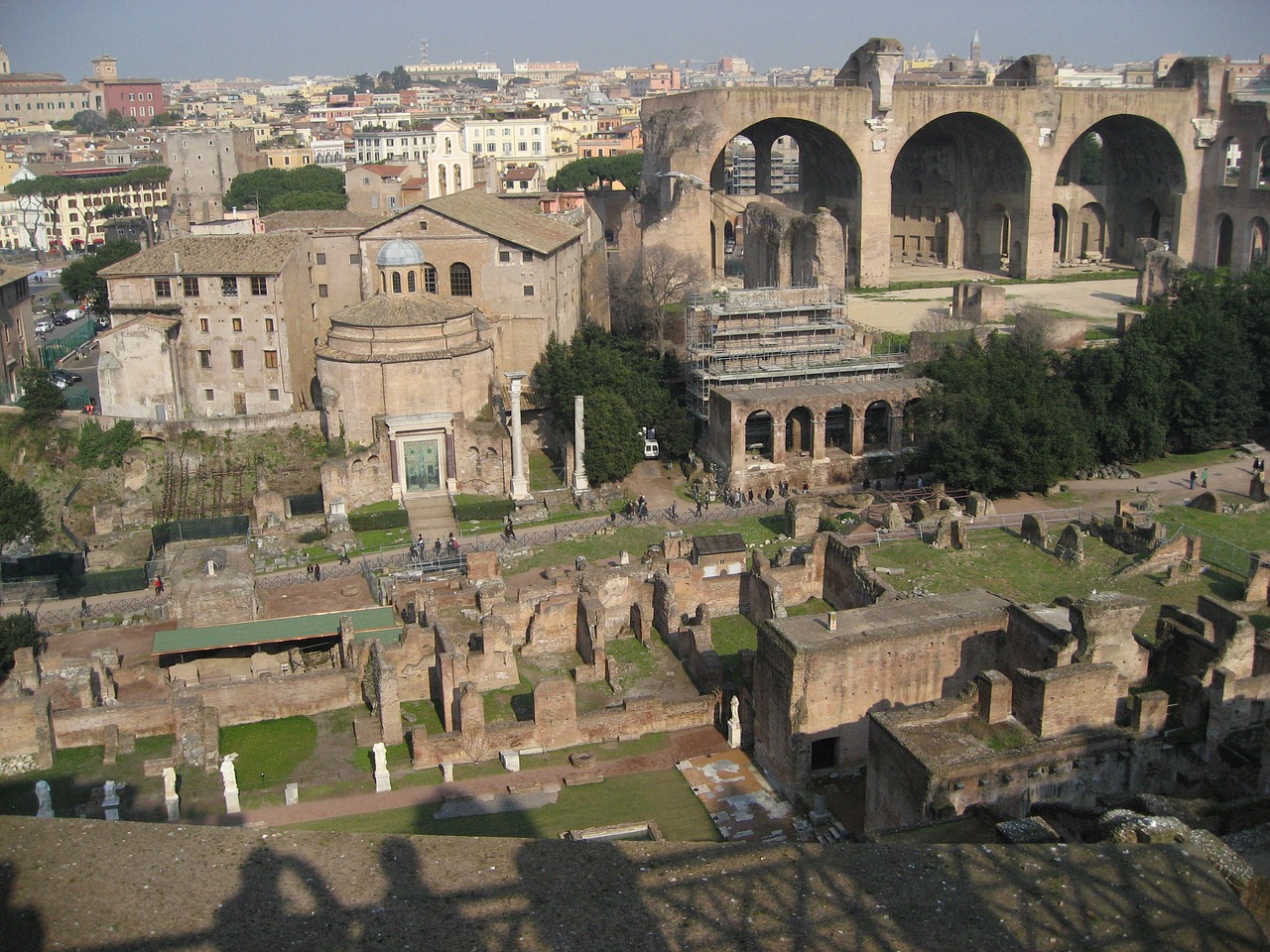
The best-known ruins include the Temple of Saturn, the Arch of Titus, the Curia Julia, and the Basilica of Maxentius. Many walls, columns, and temple remains still sit on their original site, showing how Rome developed over several centuries.
Yes. The Roman Forum begins just a few minutes' walk west of the Colosseum and forms one connected archaeological area together with the Palatine Hill and the Imperial Fora.
The "Forum Pass SUPER" gives access to the Roman Forum, the Palatine Hill, and the Imperial Fora without including the Colosseum. The ticket is valid for 30 days from purchase.
A guide makes orienting yourself much easier, since many structures survive only as foundations, columns, or scattered fragments. A guide can explain where the Senate met, which temples belonged to which gods, and how the square was actually used in daily life in the ancient city.