Vatican City – The Smallest State in the World
Vatican City, officially known as the Vatican City State, is a tiny, independent city-state entirely surrounded by the city of Rome, Italy. It serves worldwide as the spiritual and administrative center of the Roman Catholic Church.
History of the Vatican
The Vatican’s history reaches far back. In antiquity, the area was known as the Ager Vaticanus and formed part of the city of Rome. Its history as a religious center begins with the construction of St. Peter’s Basilica in the 4th century AD, built over the grave of the apostle Peter, regarded as the first bishop of Rome and thus the first pope.
Over the following centuries, papal power grew and the Vatican became an important center of both influence and wealth. That power was frequently contested, and the Vatican was plundered and occupied more than once over the course of its history.
The Vatican regained its status as an independent state only in the 19th century. After the unification of Italy in 1870, the pope lost his claims to temporal power, and the Vatican became the smallest independent state in the world.
Today, the Vatican is not only the spiritual center of the Roman Catholic Church but also a popular travel destination. With its ornate churches and museums, including the world-famous Vatican Museums and the Sistine Chapel, it draws millions of visitors every year.
Access for Tourists
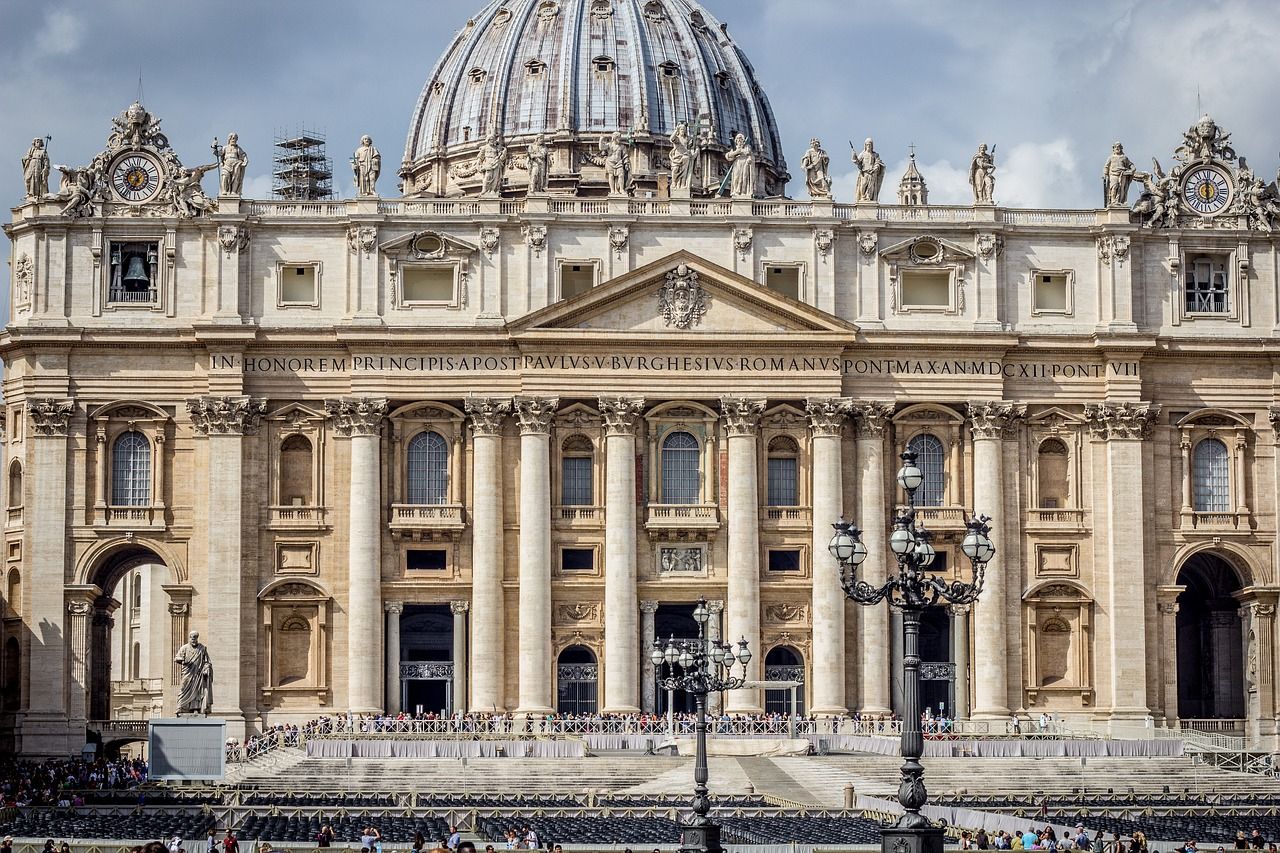
Tourists can visit St. Peter’s Square, St. Peter’s Basilica, and the Vatican Museums. St. Peter’s Square is a circular plaza in front of the basilica with a diameter of 240 meters. It rises gently toward a staircase leading up into the basilica. The interior of the church measures 211 by 152 meters and is topped by a very tall dome. An elevator takes visitors up to the roof, from where you get a sweeping view over the whole city; a spiral staircase continues up into the dome itself. The Vatican Museums hold one of the most significant and valuable art collections in the world. They are often so crowded that it’s hard to spend much time in front of any single piece.
Buildings in the Vatican
The Vatican is home to some of the world’s most recognizable and historically significant buildings. St. Peter’s Basilica is the centerpiece: not only the largest church in the world, but also a landmark of Renaissance architecture. Designed and built by artists including Bramante, Michelangelo, and Bernini, it remains the spiritual center for Catholics worldwide.
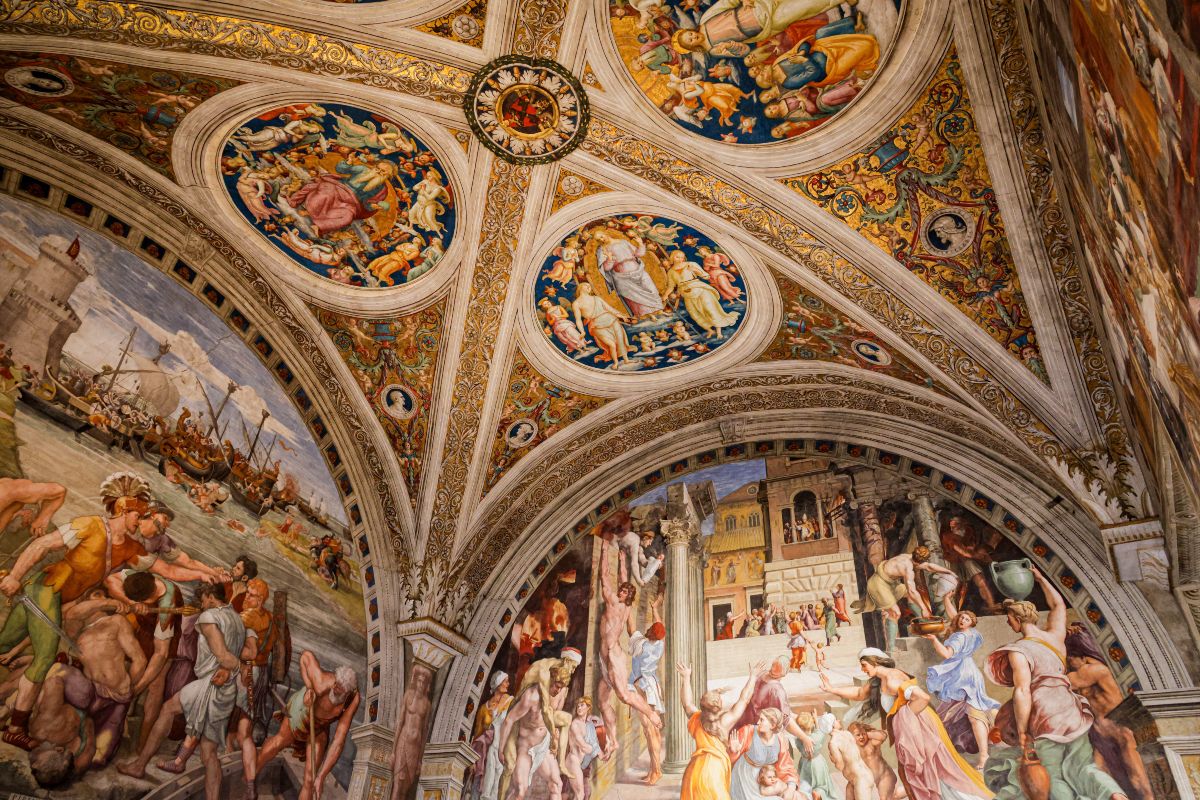
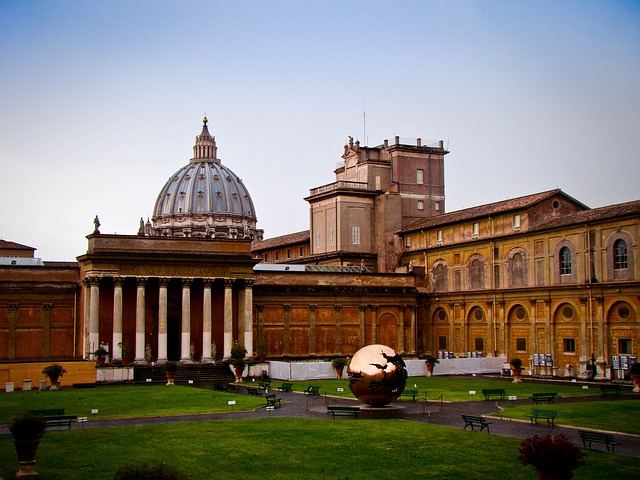
Next to St. Peter’s Basilica are the Vatican Museums. Among the largest and most significant museums in the world, they hold an extensive collection of art and artifacts spanning the entire history of Western civilization, from Egyptian mummies to modern religious art. The Sistine Chapel, located inside the museum complex, is a particular highlight. Its walls and ceiling are covered in frescoes by artists such as Botticelli and Perugino, but the ceiling painting by Michelangelo is what most visitors come to see.
The Apostolic Palace is the official residence of the pope and houses a number of offices, chapels, and private rooms. It is not always open to the public, but worth seeing whenever access is possible.
The Vatican Library is also worth mentioning: one of the oldest and most valuable libraries in the world, home to a vast collection of historical texts and manuscripts, many of them irreplaceable.
Each of these buildings represents a piece of history and culture that shapes the Vatican’s distinct character.