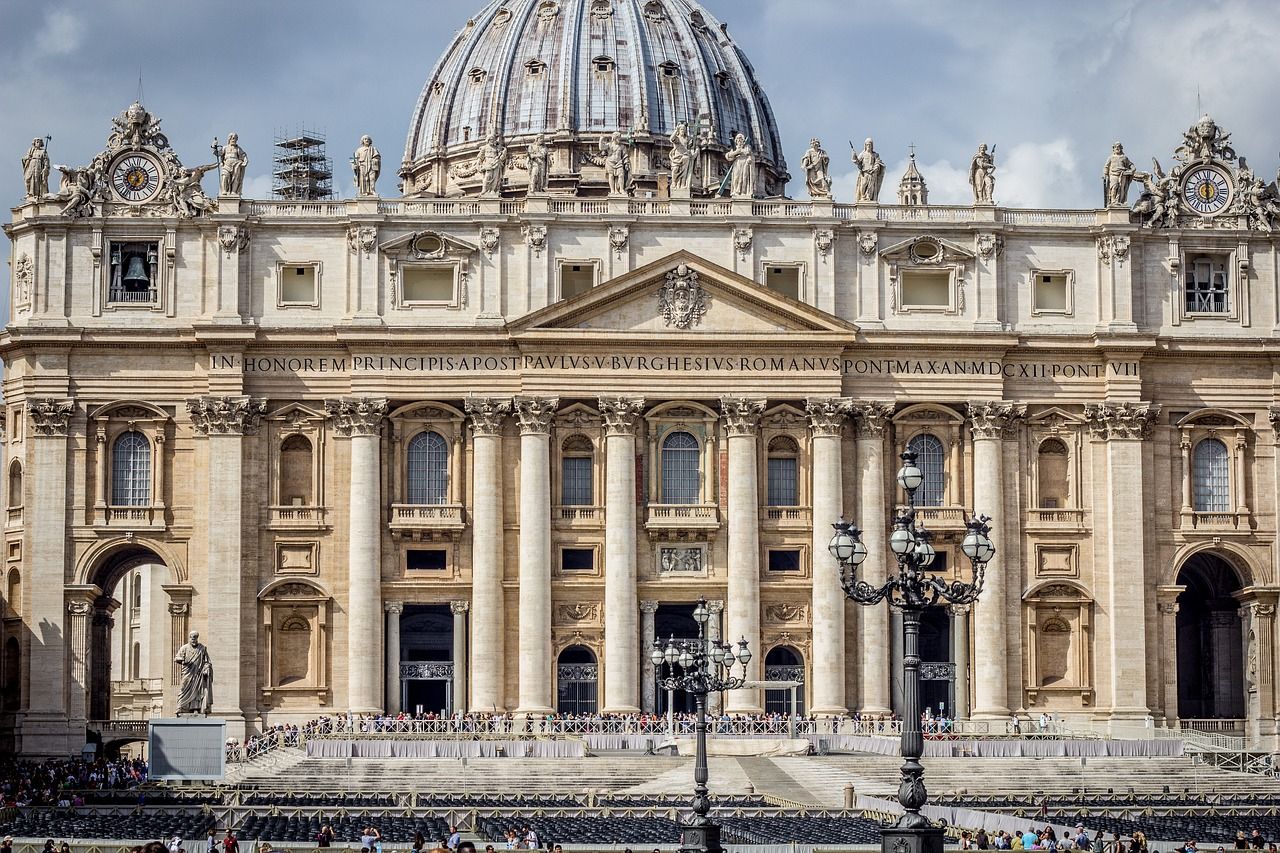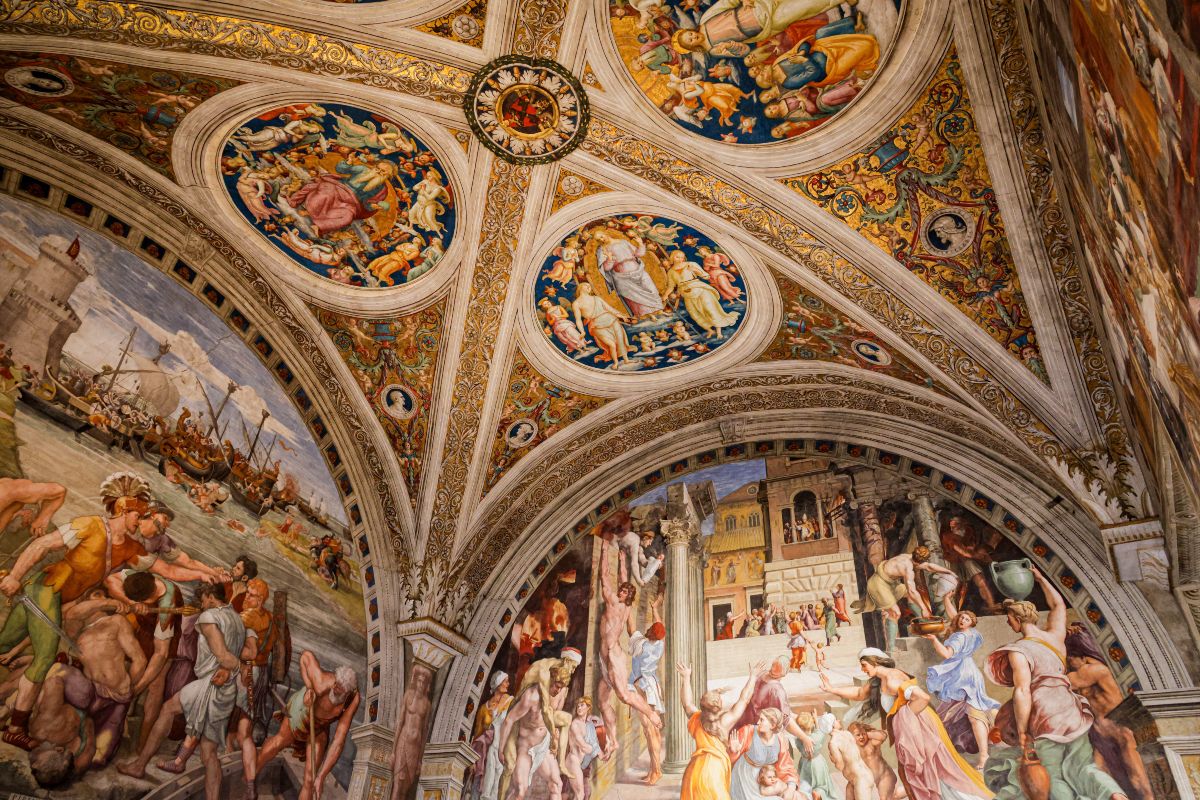
The Vatican Museums are located in Vatican City, the smallest independent state in the world, and cover more than 42,000 square meters of exhibition space. The collection dates back to the Renaissance and grew over the centuries to include paintings, sculptures, archaeological finds, and decorative art. Among the best-known works are Raphael's Rooms, the Sistine Chapel with Michelangelo's frescoes, and the ancient Laocoön Group. With around 6 million visitors a year, the Vatican Museums are among the most visited museums in the world.
History & Significance
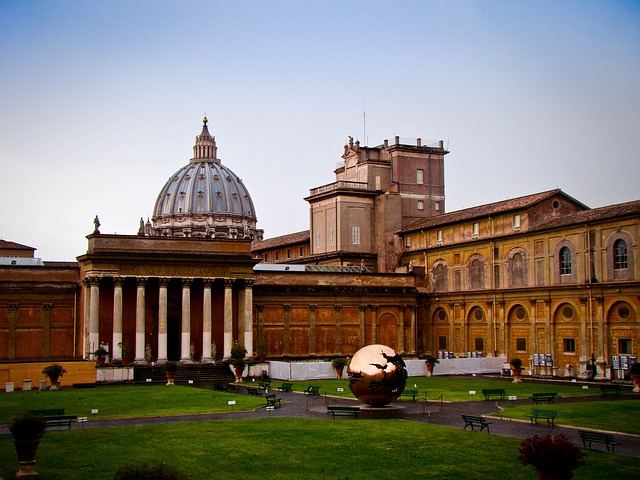
The history of the Vatican Museums begins in 1506. During excavations near the Baths of Titus, workers found the ancient Laocoön Group, a Roman copy of a Greek bronze original from the 2nd century BC. Pope Julius II bought the sculpture and had it placed in the Belvedere Courtyard. This purchase is considered the founding moment of the papal collection.
Two years later, in 1508, Julius II commissioned Michelangelo to paint the ceiling of the Sistine Chapel. By 1512, the fresco cycle depicting scenes from the Old Testament was complete. About two decades later, in 1533, Pope Clement VII commissioned Michelangelo for another work on the altar wall, but died before work began. His successor, Paul III, renewed the commission, and Michelangelo painted the Last Judgment between 1536 and 1541.
In 1771, Pope Clement XIV founded the Museo Pio-Clementino after acquiring the antiquities collections of the Fusconi and Mattei families. His successor, Pius VI, expanded the collection and had the museum building continued according to plans by architect Michelangelo Simonetti through 1793, and the museum has carried both popes' names ever since.
In 1797, the Treaty of Tolentino forced the Papal States to hand over numerous masterpieces to Napoleon. They were taken to Paris and mostly returned only after the Congress of Vienna in 1815. Through the 19th century, the museums kept growing: the Museo Chiaramonti was built under Pius VII between 1807 and 1810, the Braccio Nuovo followed in 1822, and Pope Gregory XVI opened the Museo Gregoriano Etrusco and the Museo Gregoriano Egizio in 1837 and 1839.
Opening hours
The Vatican Museums are open Monday through Saturday from 8:00 AM to 8:00 PM, with last entry at 6:00 PM. On the last Sunday of every month, the museums also open from 9:00 AM to 2:00 PM, with last entry at 12:30 PM, and admission is free.
The museums are closed on all regular Sundays, plus January 1 and 6, February 11, March 19, Easter Monday, May 1, June 29, August 14 and 15, November 1, and December 8, 25, and 26. Visitors must leave the exhibition rooms 30 minutes before closing.
| Monday | 8:00 AM – 8:00 PM |
| Tuesday | 8:00 AM – 8:00 PM |
| Wednesday | 8:00 AM – 8:00 PM |
| Thursday | 8:00 AM – 8:00 PM |
| Friday | 8:00 AM – 8:00 PM |
| Saturday | 8:00 AM – 8:00 PM |
| Sunday | Closed (except the last Sunday of the month) |
How long are the wait times at the Vatican Museums?
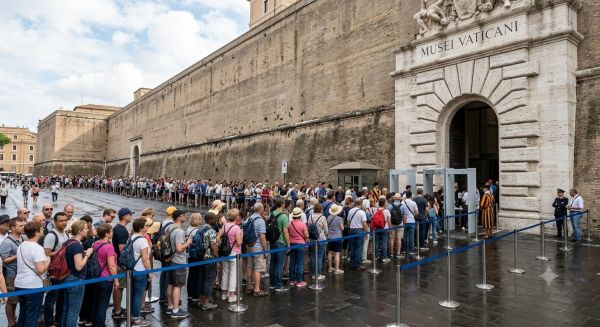 The Vatican Museums are one of Rome's most-visited sights, so lines at the day-of ticket counter can get long, especially in high season and on weekends. Arriving without a ticket can mean a wait of several hours. An online-reserved time slot with a fixed entry time skips this line entirely.
Tickets & Prices
Adults pay €20.00 for a ticket to the Vatican Museums at the ticket counter. Students and young people between 6 and 25 get the discounted ticket for €8.00, and children up to 5 get free admission. Booking online adds a €5.00 reservation fee, but guarantees your entry time and skips the line at the counter. Day tickets at the counter are often sold out by mid-morning, and even the online allotment can be booked out weeks ahead during high season.
| Adults (18+) | from €20.00 |
| EU students (18–25) | from €8.00 |
| Teens / children (6–17) | from €8.00 |
| Children (up to 5) | Free |
| Audio guide | €7.00 |
| Online reservation fee | €5.00 |
Where can you buy tickets for the Vatican Museums?
Tickets for the Vatican Museums are sold at the ticket counter, though often only for the coming days, since many time slots are booked out well in advance. Booking online with a fixed entry time saves you the long lines at the counter and is the more practical option.
Buy tickets online
Direct booking, flexible cancellation up to 24 hours before your visit.
Directions & Location
The Vatican Museums sit on the outer edge of Vatican City and are easy to reach by metro, bus, or tram. By metro, the best stop is "Ottaviano" on Line A, just a few minutes' walk from the entrance. The "Cipro" stop is also within walking distance.
By bus, you can reach the Vatican via lines 32, 81, and 982 to the "Piazza del Risorgimento" stop, or via lines 492 and 990 to "Via Leone IV / Via degli Scipioni."
| Metro | A | Ottaviano & Cipro |
| Bus | 32, 81, 982 | Piazza del Risorgimento |
| Bus | 492, 990 | Via Leone IV / Via degli Scipioni |
| Tram | 19 | Piazza del Risorgimento |
Highlights – What to See
Sistine Chapel
Between 1508 and 1512, Michelangelo painted the ceiling frescoes with scenes from the Old Testament for Pope Julius II. Between 1534 and 1541, he followed with the Last Judgment on the altar wall, commissioned by Pope Paul III. The chapel still serves as the site of papal elections today.
Raphael's Rooms
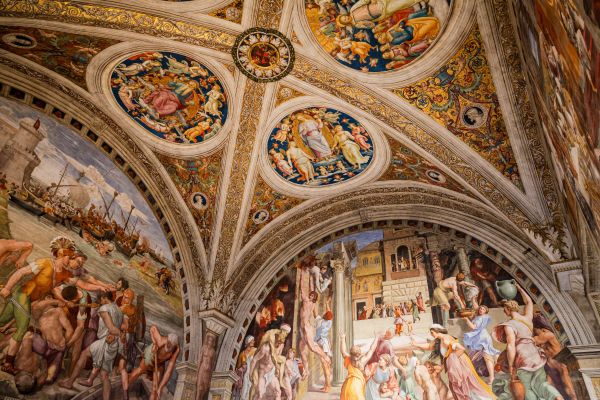
Four connected rooms that Raphael and his workshop decorated with frescoes between 1508 and 1524. Among the best-known works is The School of Athens in the Stanza della Segnatura.
Laocoön Group
A marble sculpture discovered during excavations near the Baths of Titus in 1506, a Roman copy of a Hellenistic bronze original. Pope Julius II bought the group right after its discovery; it now stands in the Museo Pio-Clementino.
Gallery of Maps
A 120-meter corridor with 40 fresco maps of the Italian regions, painted by Ignazio Danti and completed in 1583. The ceiling itself is considered one of the most elaborate in the museums.
What Should You Know Before Visiting the Vatican Museums?
A dress code applies in the Vatican Museums, as it does throughout Vatican City: knees and shoulders must be covered, and low-cut tops aren't allowed. Hats are removed on entering the museums.
Photo Gallery
Frequently Asked Questions
For a tour of the highlights, plan for at least 3 to 4 hours. If you want to explore the collection in more depth, you can easily spend half a day there.
Yes, it's part of the museum route and sits at the end of the standard tour; no separate ticket is needed.
Not for individual visitors. The direct passage from the Sistine Chapel to St. Peter's Basilica is generally only open for booked group tours; everyone else leaves the museums and enters the basilica through the separate entrance on St. Peter's Square.
Photography without flash is allowed in most rooms. Photos and videos are completely prohibited in the Sistine Chapel.
Early entry at 8:00 AM and the last two hours before closing tend to be the least crowded. Mondays and rainy days are the busiest.