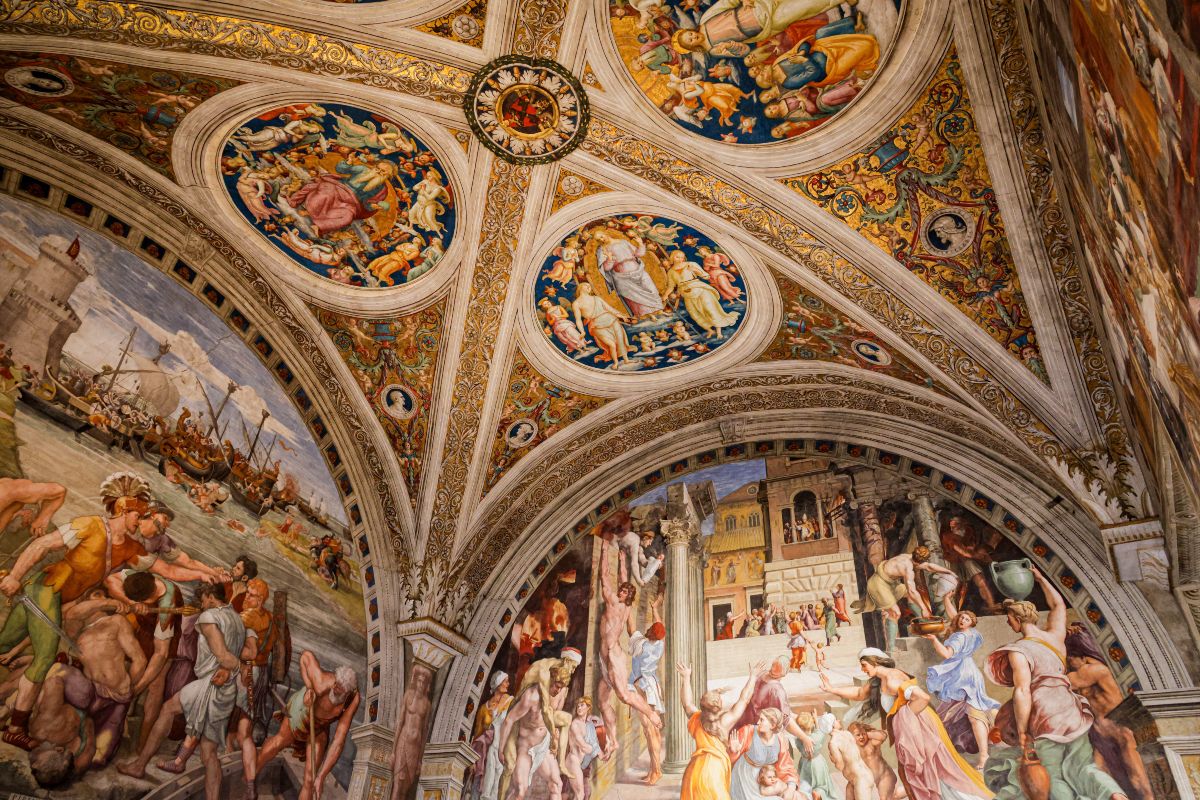
The Sistine Chapel is one of the best-known landmarks in the Vatican and part of the Vatican Museums. It draws millions of visitors every year, mainly for its world-famous frescoes by Michelangelo and other Renaissance masters. Originally built as the pope's private chapel, it still serves today as the site of major ceremonies, including the conclave to elect a new pope. Stepping into the Sistine Chapel means standing in front of a complete work of art whose level of detail and symbolism is hard to find anywhere else in Rome.
History of the Sistine Chapel
The Sistine Chapel was built in the late 15th century under Pope Sixtus IV, who it's named after. From the start, it served as the pope's private chapel and as the central setting for major ceremonies of the Catholic Church. The building replaced an older chapel, built during a period of political and ecclesiastical upheaval.
Shortly after its completion, the chapel was decorated with frescoes by some of the most significant artists of the Renaissance, including Sandro Botticelli, Domenico Ghirlandaio, and Pietro Perugino. The Sistine Chapel reached the defining high point of its history in the early 16th century, when Pope Julius II commissioned Michelangelo to decorate the ceiling. Between 1508 and 1512, he created a monumental work depicting scenes from Genesis, including the world-famous image of the Creation of Adam.
In 1533, Pope Clement VII additionally commissioned Michelangelo for a monumental Last Judgment on the altar wall, but died before work began. His successor, Paul III, renewed the commission, and Michelangelo carried out the work between 1536 and 1541. With these works, the chapel became a complete artistic masterpiece, still considered among the most significant of the Renaissance today.
The Sistine Chapel also carries the highest religious significance: since the 19th century, it has been the site of the conclave to elect a new pope, most recently in May 2025, when Pope Leo XIV was elected.
Opening Hours of the Sistine Chapel
The Sistine Chapel doesn't have its own opening hours; it follows the regular hours of the Vatican Museums, since it's only accessible through them. It's open Monday through Saturday between 8:00 AM and 8:00 PM, with last entry at 6:00 PM. The museums stay closed on Sundays, except for the last Sunday of the month, when admission is free and opening hours run from 9:00 AM to 2:00 PM.
There are also public holidays when the museums are closed: January 1 and 6, February 11, March 19, Easter Monday, May 1, June 29, August 14 and 15, November 1, and December 8, 25, and 26.
Since hours can change, especially around religious holidays or special events, it's worth checking the current information on the Vatican Museums' official website shortly before your visit.
| Monday | 8:00 AM – 8:00 PM |
| Tuesday | 8:00 AM – 8:00 PM |
| Wednesday | 8:00 AM – 8:00 PM |
| Thursday | 8:00 AM – 8:00 PM |
| Friday | 8:00 AM – 8:00 PM |
| Saturday | 8:00 AM – 8:00 PM |
| Sunday | Closed |
Wait Times at the Sistine Chapel
Since the Sistine Chapel is only accessible through the Vatican Museums, wait times depend directly on visitor traffic at the museum entrances. Expect long lines, especially in summer, on weekends, and during holiday periods, sometimes stretching several hundred meters, particularly in the morning when most visitors arrive.
Once inside the museums, the crowds spread out a little, but visitors often bunch up again right before the entrance to the chapel itself, since only a limited number of people are let in at a time. Late afternoon tends to be somewhat quieter, though you should still plan for some waiting either way.
If you want to skip the long lines, book your ticket online in advance and choose a time slot. With this kind of ticket, you go straight to the reserved entrance and skip the regular ticket counter line. Guided tours get you in even faster, since these groups often have priority access.
Tickets & Admission Prices for the Sistine Chapel
The Sistine Chapel is part of the Vatican Museums, so there's no separate ticket just for the chapel. Regular admission automatically gives you access to all museum areas, including the Sistine Chapel.
| Adults (18+) | from €20.00 |
| EU students (18–25) | from €8.00 |
| Teens / children (6–17) | from €8.00 |
| Children (up to 5) | Free |
| Audio guide | €7.00 |
| Advance booking fee | €5.00 |
Where can you buy tickets for the Sistine Chapel?
Tickets for the Sistine Chapel are only available through the Vatican Museums, since the chapel is a fixed part of the museum tour. You can buy your ticket directly on-site at the museum entrance, but expect long wait times there given the high demand. Buying in advance through the official Vatican Museums website or vetted ticket partners is much more relaxed, since it gets you a fixed time slot and fast entry without lining up. Many travelers also opt for combo tickets or guided tours that include, alongside admission to the museums and the Sistine Chapel, other highlights such as St. Peter's Basilica or the Vatican Gardens. Buying online is therefore the most convenient way to avoid wait times and start your visit stress-free.
Buy tickets online
Direct booking, flexible cancellation up to 24 hours before your visit.
How to Get to the Sistine Chapel
To visit the Sistine Chapel, you'll need to enter through the Vatican Museums, since it's part of the museum tour. There's no direct entrance from outside. The main entrance is on Viale Vaticano, north of St. Peter's Square.
The easiest way to reach the chapel is Metro Line A. Get off at "Ottaviano" or "Cipro" – both are about a 10-minute walk from the museum entrance. Alternatively, several bus lines serve the area, such as line 49 (stop "Viale Vaticano / Musei Vaticani") or lines 32, 81, and 982 to "Piazza del Risorgimento." The tram also gets you close, with line 19 stopping at "Risorgimento."
If you're coming from the city center, the Vatican is also an easy walk: from Castel Sant'Angelo, it's about a 15-minute walk to the museum entrance. Do plan for extra time, though, since long lines form in front of the Vatican Museums, especially in the morning.
| Metro | A | Ottaviano & Cipro |
| Bus | 49 | Viale Vaticano / Musei Vaticani |
| Bus | 32, 81, 982 | Piazza del Risorgimento |
| Tram | 19 | Risorgimento |
Don't Miss These
Michelangelo's Ceiling Fresco
Between 1508 and 1512, Michelangelo painted nine scenes from the Book of Genesis on the ceiling for Pope Julius II, including the world-famous Creation of Adam.
The Last Judgment
This monumental fresco on the altar wall was painted between 1536 and 1541. Commissioned by Pope Clement VII and actually carried out under his successor, Paul III, it shows Christ as judge of the world, surrounded by more than 300 figures.
Frescoes by the Renaissance Masters
On the side walls, Sandro Botticelli, Domenico Ghirlandaio, and Pietro Perugino painted scenes from the lives of Moses and Christ before Michelangelo, created in the 1480s.
Site of the Conclave
Since the 19th century, cardinals have elected the new pope here. The most recent conclave took place in May 2025 and ended with the election of Pope Leo XIV.
What Should You Know Before Visiting the Sistine Chapel?
Strict no-photography rules apply inside the Sistine Chapel, unlike the rest of the museum complex, where photos without flash are allowed. Staff also regularly ask visitors to stay quiet: the chapel is a consecrated space, and loud talking or phone calls aren't welcome.
As throughout the Vatican, a dress code applies: shoulders and knees must be covered, and hats are removed on entering.
Frequently Asked Questions
Access is possible Monday through Saturday between 8:00 AM and 8:00 PM, with last entry at 6:00 PM. Every last Sunday of the month has a reduced window from 9:00 AM to 2:00 PM; on all other Sundays and some religious holidays, it's closed.
Unlike the rest of the Vatican Museums, photography isn't allowed inside the Sistine Chapel itself, while the rest of the museum complex permits photos without flash or a tripod. The rule protects the delicate fresco surfaces and preserves the silence and sacred character of the space.
Since it's a consecrated space, shoulders and knees must be covered; sleeveless tops, shorts, and skirts above the knee aren't accepted. Hats must also be removed on entering, and staff can deny entry if these rules aren't followed.
Pope Julius II commissioned Michelangelo Buonarroti in 1508 to paint the ceiling, which the artist completed in October 1512 after four years of work. About two decades later, Michelangelo also created the monumental "Last Judgment" on the altar wall for Pope Clement VII, completing it in 1541.
Beyond its role as an art museum, the Sistine Chapel has served as the site of the conclave since 1878, where cardinals elect a new pope. The most recent conclave took place in 2025 and ended with the election of Pope Leo XIV.