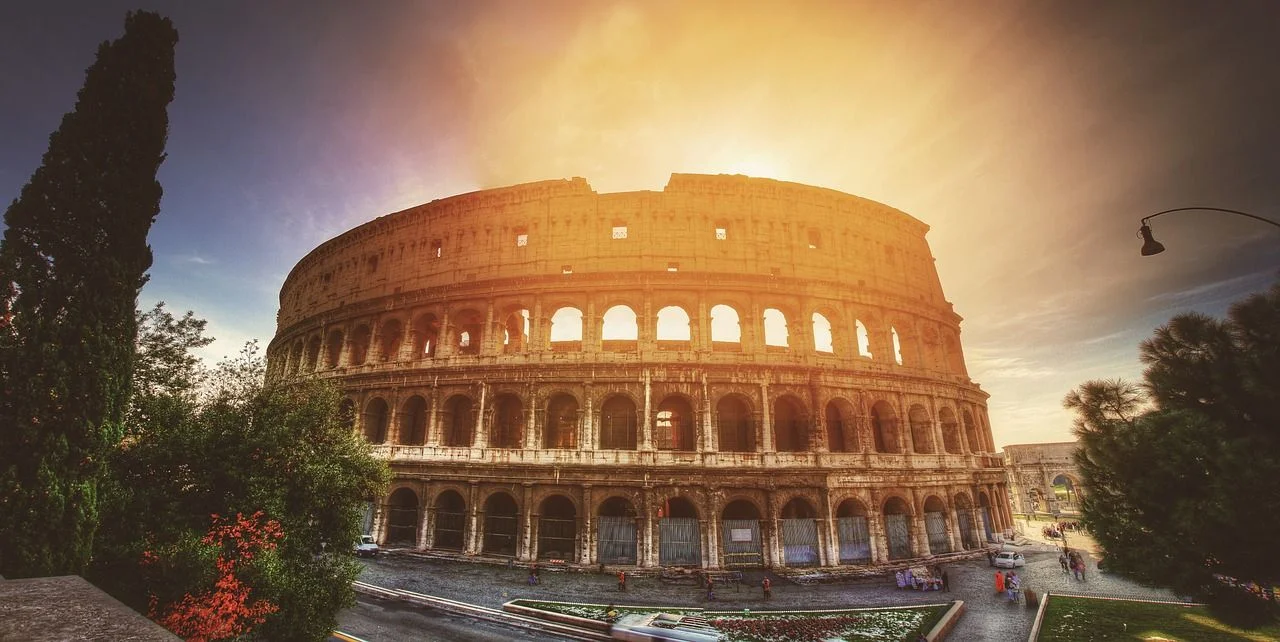
The Colosseum, nearly 2,000 years old, is arguably the best-known building in Rome. About 6 million people visit it every year. For safety reasons, no more than 3,000 visitors are allowed inside at the same time, which is why a timed-entry ticket system was introduced in early 2019. Visitors are assigned a specific entry time when they buy their ticket, or they can choose one themselves. Entry is only granted during the selected time slot.
History & Significance
The Colosseum, the majestic oval at the heart of Rome, is more than an architectural achievement. It’s what remains of an era when gladiator fights and large-scale spectacles held the public’s attention.
Construction began after the death of Emperor Nero in 68 AD. Emperor Vespasian started the amphitheater in 72 AD, and his sons Titus and Domitian continued and completed the project. It was inaugurated in 80 AD with games that ran for 100 days.
Its official name, "Flavian Amphitheatre," comes from the family name of these emperors. The more common name "Colosseum" likely comes from a colossal statue, the "Colossus of Nero," that once stood nearby. At its peak, the Colosseum held up to 50,000 spectators. It hosted gladiator fights as well as staged animal hunts, mock naval battles, and other large productions. The fights were brutal and often fatal, for both people and animals.
As the Roman Empire declined and Christianity spread, the Colosseum gradually lost its original purpose. During the Middle Ages, it was used for a range of purposes, including housing, workshops, and even as a fortress. Much of its original material was removed and reused to build other structures in Rome.
Despite centuries of decay and neglect, the Colosseum has survived and today stands as a record of ancient Roman engineering and culture. Extensive restoration work has been carried out since the 20th century to preserve the monument for future generations.
Opening Hours, Wait Times & Free Admission Days
The Colosseum is open daily year-round from 8:30 AM. The only closing days are January 1 and December 25. On some days it may also close on short notice, for example during a papal visit (Good Friday) or sporting events.
Opening hours October 1 – October 24, 2026
| Monday | 8:30 – 6:30 PM |
| Tuesday | 8:30 – 6:30 PM |
| Wednesday | 8:30 – 6:30 PM |
| Thursday | 8:30 – 6:30 PM |
| Friday | 8:30 – 6:30 PM |
| Saturday | 8:30 – 6:30 PM |
| Sunday | 8:30 – 6:30 PM |
Opening hours October 25, 2026 – February 28, 2027
| Monday | 8:30 – 4:30 PM |
| Tuesday | 8:30 – 4:30 PM |
| Wednesday | 8:30 – 4:30 PM |
| Thursday | 8:30 – 4:30 PM |
| Friday | 8:30 – 4:30 PM |
| Saturday | 8:30 – 4:30 PM |
| Sunday | 8:30 – 4:30 PM |
How long are the wait times at the Colosseum?
The Colosseum is one of the most visited sites in the "Eternal City," which is why tickets are sold with a fixed entry time. Anyone planning to buy a ticket on-site should expect long lines at the ticket counters – an hour or two of waiting is common. On top of that comes the wait at the entrance itself, which can add up to another hour even with a timed ticket, since every visitor goes through a security check first.
To cut down on waiting time, we recommend buying your ticket in advance. That lets you go straight to the ticket-holder entrances and skip the ticket-counter line.
Tickets & Prices
Prices last changed in 2024, when an additional ticket type (the Full Experience Ticket) was introduced. Standard admission to the Colosseum costs €18.00 for adults 18 and over. EU citizens between 18 and 25 can buy a discounted ticket for €2.00. Visitors under 18 get free admission. The standard ticket covers levels 1 and 2 of the Colosseum. Levels 4 and 5 are only accessible on a dedicated guided tour. The Full Experience Ticket includes everything in the standard ticket, plus access to the arena floor or the underground level.
The same ticket also covers the Roman Forum and Palatine Hill – those admissions are already included. Depending on the combo ticket you buy, it’s valid for either 24 hours or 2 days and allows one entry each into the Colosseum, the Palatine, and the Roman Forum.
Ticket options and prices (category, access level, validity, price on-site):
| Adults (18+) | Levels 1 + 2 | 24 hours | from €18.00 |
| Adults (25+, Full Experience) | Levels 1 + 2 + arena or underground | 2 days | from €24.00 |
| EU citizens (18–25) | Levels 1 + 2 | 24 hours | €2.00 |
| Under 18 | Levels 1 + 2 | 24 hours | Free |
| Reservation fee | – | – | €2.00 |
| Audio guide | – | – | €5.50 |
| Audio-video guide | – | – | €6.00 |
Note: the reservation fee applies to every visitor to the Colosseum.
Since early 2019, the Colosseum can only be visited with a reserved ticket.
Where can I buy Colosseum tickets?
The easiest way to get a ticket is to buy it online. Buying online lets you pick your date and entry time at your own pace, or book a guided tour. Many time slots sell out days, sometimes weeks, in advance. Tickets are also sold on-site at the ticket counters, but you only find out which time slots are still available once you’re there. Showing up on a whim rarely works, since tickets are typically sold out days ahead, and lines at the ticket counters can be very long.
What does the ticket include?
Along with the Colosseum itself, the ticket also covers the Roman Forum and Palatine Hill. Within the ticket’s validity window, each of these is a one-time entry.
Can I visit the Colosseum for free?
Yes, on select days each year, Rome offers free admission to residents and visitors alike. This is typically the first Sunday of each month, plus a handful of additional dates, such as the Italian national holiday on June 2. Expect noticeably longer wait times on these days compared to the already busy regular schedule.
Free admission days in 2026 for the Colosseum:
- January 5, 2026
- February 1, 2026
- March 1, 2026
- April 5, 2026
- May 3, 2026
- June 1 + 2, 2026
- July 5, 2026
- August 2, 2026
- September 6, 2026
- October 4, 2026
- November 1, 2026
- December 6, 2026
Buy tickets online
Direct booking, flexible cancellation up to 24 hours before your visit.
Directions & Location
The easiest way to reach the Colosseum is by Metro line B or C. The "Colosseo" station sits right next to it. Walking there along the Roman Forum is also a nice option, and the Colosseum is visible from a distance. Tram lines 3 and 8 stop nearby too, at "Piazza del Colosseo," just steps from the amphitheater.
| Metro | B, C | Colosseo |
| Bus | 51, 75, 85, 87, 117 | Colosseo |
| Tram | 3, 8 | Colosseo / Salvi N. |
Highlights – What to See
The Arena
The arena floor was the main stage of the amphitheater, host to gladiator fights, staged animal hunts, and public executions. A partially reconstructed section of the floor now shows the level where fighters once stood in front of the crowd.
The Hypogeum
Below the arena floor lies the hypogeum, a network of tunnels, chambers, and lifts. Animals, sets, and fighters were brought up to the arena through trapdoors from here. The space makes clear how much technical planning went into staging the games.
The Spectator Stands
The surviving seating tiers reflect the strict social hierarchy of ancient Rome. Senators sat closest to the arena, while ordinary citizens were seated higher up. The network of stairs and passages let large crowds move through the building quickly.
The Facade
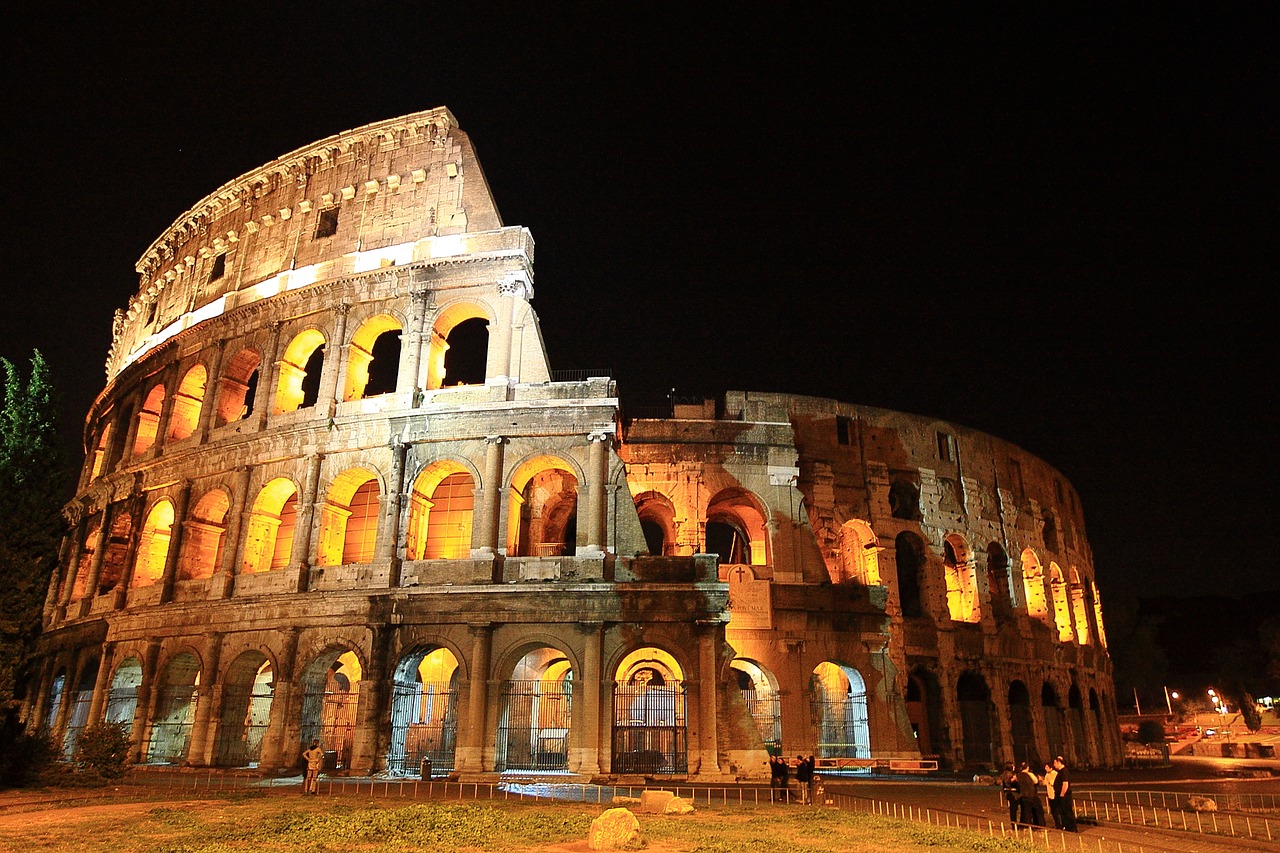
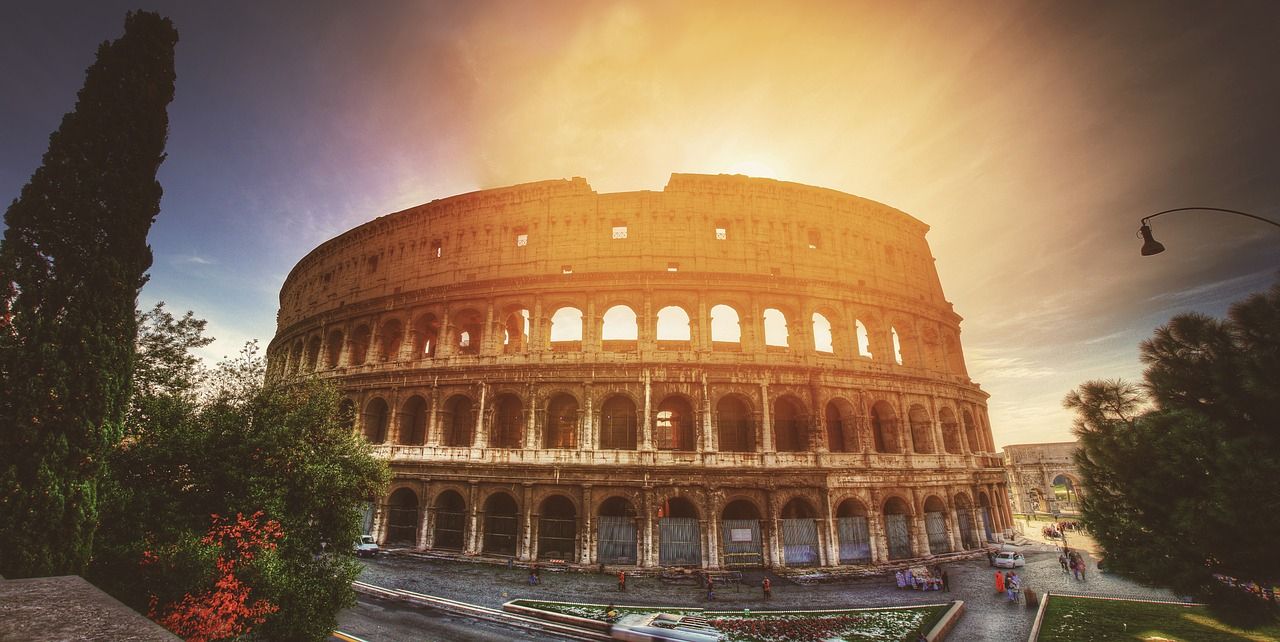
The exterior is built in tiers of stacked arches and columns in different architectural orders. It signals the scale of the amphitheater even from a distance and is one of the clearest surviving examples of Roman engineering, built in the 1st century AD under the Flavian emperors.
Tips for Visiting the Colosseum
1. A reservation (€2.00 fee) is always required to visit the Colosseum. You choose your entry time slot when you book.
2. Arrive about 15–30 minutes before the time printed on your ticket. Entry is allowed for a maximum of 15 minutes past your slot, but you’ll still need to pass through a security check similar to an airport’s – so budget some waiting time even with a ticket.
3. The Colosseum ticket is a combo ticket, also valid for the Roman Forum and Palatine Hill.
4. The Full Experience Ticket is valid for 2 consecutive days and allows one visit each to the Colosseum and the Roman Forum/Palatine. The Colosseum can only be entered at your assigned time; the Forum and Palatine can be visited any time within the 2 days.
5. The standard Colosseum ticket is valid for 24 hours from first use.
6. Buy tickets or guided tours online several days or weeks in advance. That way you’re guaranteed your preferred date and time, and wait times on-site stay manageable.
7. Tours to the upper levels 4 and 5 are usually booked out weeks in advance, so plan ahead if that’s part of your visit.
8. For more context while inside, we recommend a ticket with an audio and/or video guide, which you can download directly to your phone. Guides can also be rented on short notice at the entrance, but expect up to 30 minutes of extra waiting time for that.
9. Tickets can also be bought on-site. Same-day tickets are sold until 3:00 PM, subject to availability, which is rare. After 3:00 PM, only tickets for the next day are sold.
Photo Gallery

Frequently Asked Questions
The Colosseum is the largest amphitheater to survive from ancient Rome. Emperor Vespasian began construction around 72 AD; his son Titus opened the arena in 80 AD. Its stands held tens of thousands of spectators.
The arena hosted gladiator fights, staged animal hunts, and public executions. Beneath the arena floor were tunnels, lifts, and holding rooms for animals, sets, and performers, who reached the arena directly through this underground structure.
Yes. Admission to the Colosseum is booked for a fixed time slot, and entry is only possible during the time printed on your ticket.
The standard ticket allows a 75-minute stay inside the Colosseum. You'll usually want more time for the Roman Forum and Palatine Hill, since the site is large and several paths wind through the ruins.
The 24-hour Colosseum ticket also includes admission to the Roman Forum and Palatine Hill. You can visit these before or after your booked Colosseum time slot.